Starting Point
You know Agile, but not always what to do with the team dynamic in front of you.
Especially when the room becomes political, avoidant, overly dependent, or quietly resistant.
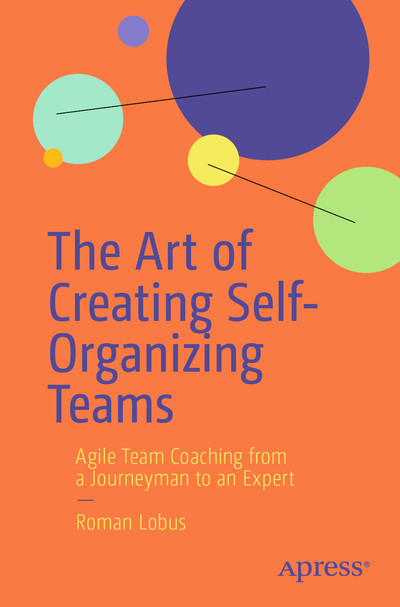
New Book by Roman Lobus
Agile Team Coaching from a Journeyman to an Expert
A practitioner's guide to coaching teams through power dynamics, resistance, and real-world complexity — so they can truly own their work.
Get Your Copy
Springer
Publisher's store — Print & eBook
O'Reilly
Read with your team subscription
Amazon US
Kindle & Print
Also available on
Reader Fit
Primary audience: Scrum Masters, Agile coaches, team leads, and adjacent change practitioners who already understand Agile and need stronger coaching leverage.
Starting Point
Especially when the room becomes political, avoidant, overly dependent, or quietly resistant.
Pain Point
The book offers structures, questions, exercises, and ways to intervene without becoming the fixer.
Outcome
That includes contracting, norms, decision rights, working with resistance, and your own reflective practice.
Reader Outcomes
Process
From contact and contracting through experimentation, repair, and sustainment.
Team Dynamics
Read the room systemically instead of treating every problem as a ceremony issue.
Interventions
Use boundaries, authority ladders, agreements, experiments, and reflection loops.
Growth
Work with supervision, reflective practice, and the inner game required to stay grounded in complexity.
Chapter Overview
Part 1
Why this work matters and how the ICF team coaching competencies translate into Agile contexts.
Part 2
Where the book turns into a field manual: contracts, imagos, operating systems, and experiments.
Part 3
Roadblocks, shadow dynamics, resistance, ethics, and the realities of virtual coaching.
Part 4
Reflection, supervision, vertical development, and the inner conditions of mature coaching practice.
Most Agile books stop at frameworks and ceremonies. This one starts where they leave off — the human dynamics that actually determine whether a team becomes autonomous. Power, politics, resistance, hidden contracts. If those words describe your Monday morning, this is the book.
Transactional Analysis (TA) is a practical psychology for understanding how people relate in groups — ego states, psychological contracts, group imago, drama triangles. The book teaches you everything you need as you go. No prior TA knowledge required.
That's exactly what Part 3 is about. Shadow dynamics, hidden agendas, authority confusion, and competing commitments. The book gives you tools to surface what's actually going on — and coach through it without becoming the fixer.
Yes. Every chapter connects to downloadable tools — contracting canvases, team imago worksheets, authority ladders, resistance radars. The book is designed as a field manual, not a philosophy lecture.
The book addresses this reality directly — including three-cornered contracting with sponsors, navigating misaligned agendas, and coaching within organisational constraints. It's written for the real world, not the ideal one.
The book supports both developing and experienced practitioners. If you work with teams and want to go beyond facilitation into genuine coaching — understanding dynamics, designing interventions, growing your own practice — this is your starting point.
Next Book · Manuscript Complete
Transactional Analysis for Team Coaching and Organisational Change
The second book goes below the surface of team design into the recurring interaction patterns that survive good contracts, clear roles, and sincere intent. A practical TA method for coaches, OD practitioners, and change agents — without blame, diagnosis, or rescue.
Learn more about the book