BART for Agile Teams: A Practical Diagnostic for Hidden Dysfunction
How boundary, authority, role, and task confusion create recurring team problems that coaches too often misread as personality or maturity issues.
The team problem that looks personal until you map the setup
A planning meeting keeps derailing. The Product Owner sounds controlling. Engineers look passive. A manager keeps stepping in. The Scrum Master feels trapped in low-grade authority conflict. The usual read is interpersonal: difficult personalities, fragile trust, weak maturity.
BART is useful precisely because it interrupts that reflex. Boundary, Authority, Role, and Task help you diagnose whether the room is misdesigned before you explain the tension through character, style, or motivation.
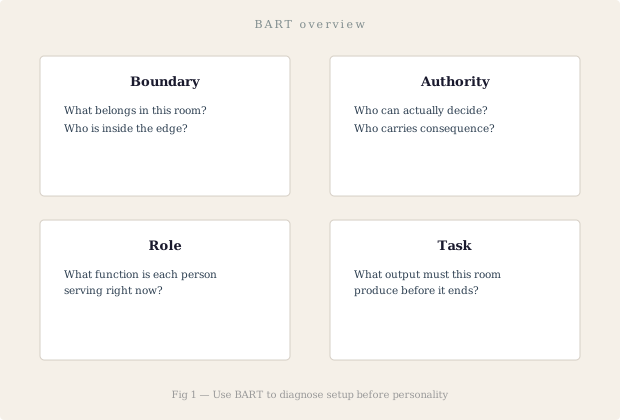
What BART helps you see
Boundary
Who is in this room, what belongs here, and what has leaked in from elsewhere without being named.
Authority
Who can decide, who only influences, and who is carrying consequences without the right to choose.
Role
What function each person is actually serving now, not only what their title claims they should be serving.
Task
What concrete output the conversation must produce before it ends, instead of the vague impression that the meeting was useful.
Boundary failures make everything feel personal
Teams often look conflicted when they are actually too open. External urgency floods the room. Too many decision-makers are present. Cross-team interfaces become local blame. Once the boundary is blurred, people start reacting to imported pressure as if it were each other's character.
Boundary language is therefore one of the simplest interventions available: what belongs inside this team decision, what belongs in another interface, and what belongs to a sponsor conversation rather than to this meeting at all.
Authority confusion creates pseudo-conflict
A team can appear emotionally stuck when it is actually reading the authority map accurately. People stop acting when initiative without cover is punished. They over-argue when nobody can tell whether this room is deciding, recommending, or just preparing a message for somewhere else.
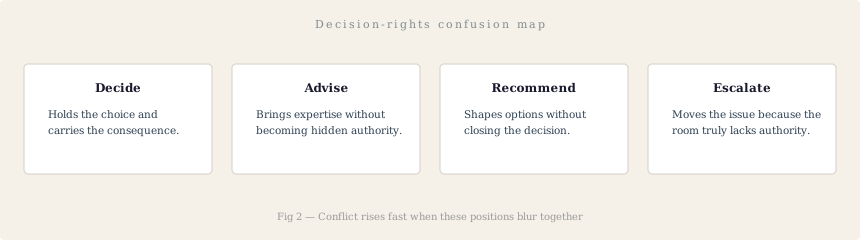
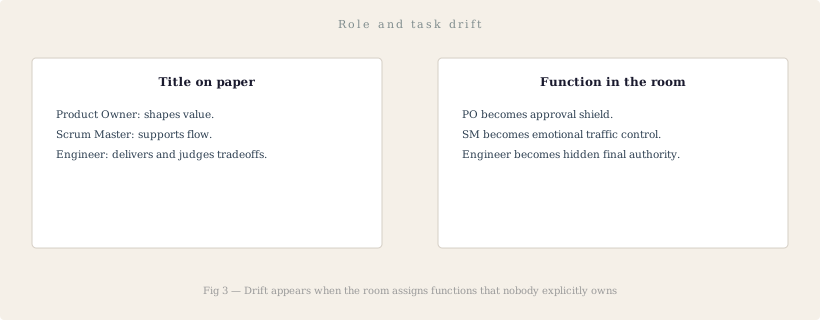
Role and task drift are where teams quietly assign each other jobs
Role confusion is rarely just about job descriptions. It is about the function the room has silently assigned. One engineer becomes the real closer. One Scrum Master becomes emotional air traffic control. One manager becomes the approval source even after saying they stepped back.
Task drift compounds the problem. A meeting meant to decide starts performing reassurance. A retrospective meant to learn becomes a place to release pressure. BART is valuable because it keeps asking what this room is actually doing, not what it says it is doing.
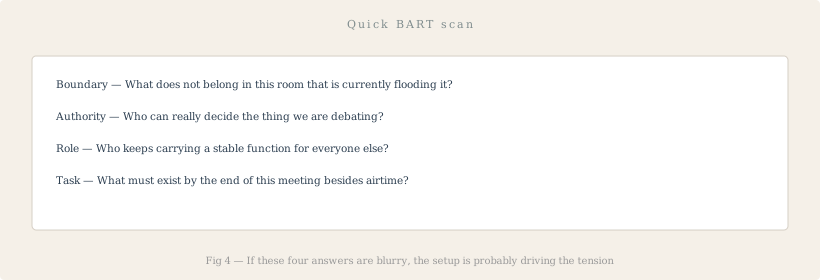
A quick BART scan for coaches
Boundary — What does not belong in this room that is currently flooding it?
Authority — Who can really decide the thing we are debating?
Role — Who keeps carrying an uncontracted function for everyone else?
Task — What must exist by the end of this meeting besides feelings and airtime?
When the problem is structural, not interpersonal
BART helps most when the room can still be improved through clearer boundaries, cleaner role design, or explicit decision-making. It should not be used to disguise real structural constraints as coachable friction. If governance genuinely blocks autonomy, BART will reveal that quickly. It will not pretend the room can simply facilitate its way past it.
That is part of its value. It lets you say, with more confidence, whether the team needs a different conversation or a different setup.
Continue Exploring
Go deeper into the work
The Book
The Art of Creating Self-Organizing Teams
The full framework behind this article — contracting, team dynamics, and practical coaching tools for every stage of the journey.
Companion Toolkit
Resistance Radar & Resilience Scorecard
Practical tools for mapping resistance patterns and measuring whether interventions increased capacity — not just compliance.
TA for Agile
Co-creative TA in Agile Contexts
Ego states, psychological contracts, group imago, and the relational concepts that underpin this article — applied to real teams.