The Coach–Team–Sponsor Triangle in Practice
A practice-first article on triangulation in Agile coaching engagements: messenger, ally, and buffer dynamics, plus re-contracting moves that restore direct contact.
The engagement that looks stable while trust quietly drains out of it
A coaching engagement can stay busy, useful, and apparently constructive long after the triangle has started to distort. The team still attends. The sponsor still says the work matters. The coach keeps adding value. Meanwhile, more meaning starts moving in side channels, private clarifications, and careful summaries rather than in direct contact.
This article owns that structure. It is not a general guide to contracting. It is a practice-first guide to spotting triangulation early, restoring directness, and keeping the coach from becoming the system's preferred substitute for contact.
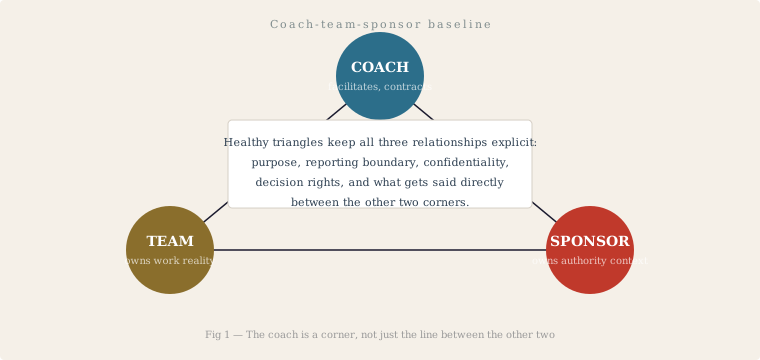
What the triangle is actually holding
The coach never works only with the team. The sponsor or other contracting authority is always shaping what counts as progress, what is safe to name, and how much organisational pressure is entering the engagement whether spoken or not.
Trouble begins when one corner tries to influence the relationship between the other two without taking responsibility for direct contact. The coach becomes useful precisely because the triangle is already carrying more than anyone wants to say openly.
Psychological distance explains why the formal contract can still fail
Formal contracting can be sound and the triangle can still distort. The missing variable is psychological distance. Two corners can move too close, one can become the outsider, or all three can operate with enough vagueness that nobody knows where difficult truths belong.
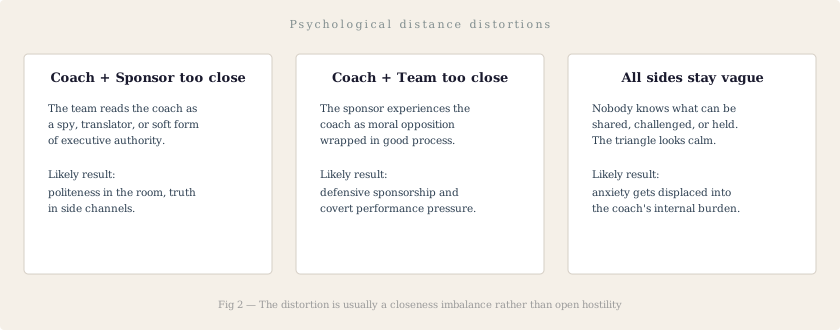
When coach and sponsor are too close, the team starts reading the coach as softened authority. When coach and team are too close, the sponsor experiences the coach as an ally instead of a practitioner. When everyone stays vague, the coach ends up carrying ambiguity that should have been contracted into the relationship itself.
Three distortion patterns to watch for
Coach as Messenger
Pressure, judgment, or interpretation travels through the coach instead of from the person who actually owns it.
Coach as Ally
The team recruits the coach as proof that leadership is unreasonable, and the triangle starts organizing around shared grievance.
Coach as Buffer
The coach absorbs friction so effectively that the sponsor-team relationship never has to mature.
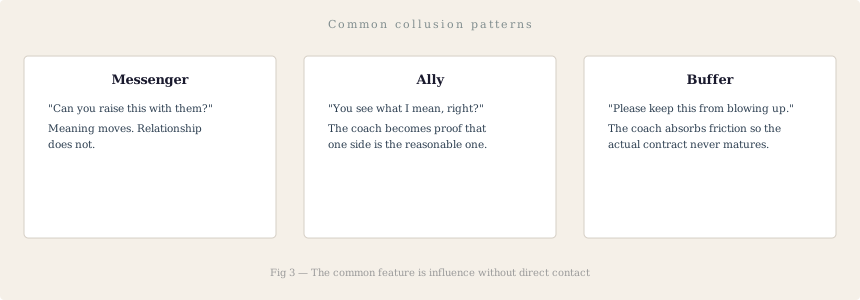
The practical warning sign is simple. If the coach is repeatedly carrying meaning, judgment, permission, or reassurance from one corner to another, the relationship is already organizing around indirection.
Re-contracting moves that restore directness
Re-contracting here is not paperwork. It is a sequence of clarifications about what is being asked, what may be reported, what belongs in direct conversation, and what role the coach will not silently take on just because the system prefers it.
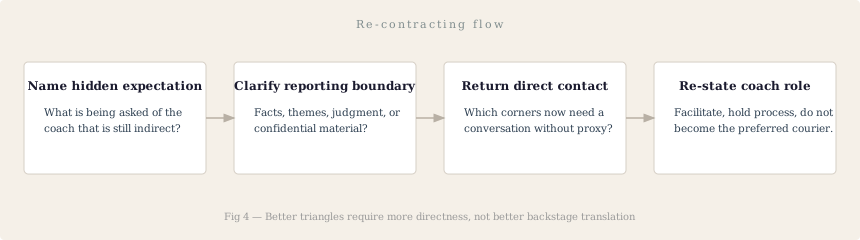
"What are you hoping I will say for you that you are not ready to say directly?"
"What can I report as themes, and what would cross the confidentiality line?"
"Which conversation now needs to happen between you rather than through me?"
"What success criteria are still different enough to distort the triangle?"
Reporting boundaries that keep the coach out of the trap
Name reporting boundaries in plain language before trust is tested.
Do not carry messages that materially change the relationship between the other two corners without asking why they are not being said directly.
Re-contract whenever confidentiality, success criteria, or decision rights have drifted.
A team deserves to know the reporting boundary in ordinary language. A sponsor deserves to know what the coach can and cannot do without collapsing trust. If those expectations are left strategically fuzzy, the engagement is already unstable.
The practical rule is to keep asking whether the next conversation should now happen directly. Facilitation is legitimate. Becoming the system's preferred substitute for contact is where the role starts to go wrong.
Continue Exploring
Go deeper into the work
The Book
The Art of Creating Self-Organizing Teams
The full framework behind this article — contracting, team dynamics, and practical coaching tools for every stage of the journey.
Companion Toolkit
Resistance Radar & Resilience Scorecard
Practical tools for mapping resistance patterns and measuring whether interventions increased capacity — not just compliance.
TA for Agile
Co-creative TA in Agile Contexts
Ego states, psychological contracts, group imago, and the relational concepts that underpin this article — applied to real teams.