Psychological Safety Theatre
Why safety slogans, surveys, and rituals fail when authority patterns, delivery pressure, and recognition norms still punish real candour.
The organisation that performs safety faster than it changes the cost of honesty
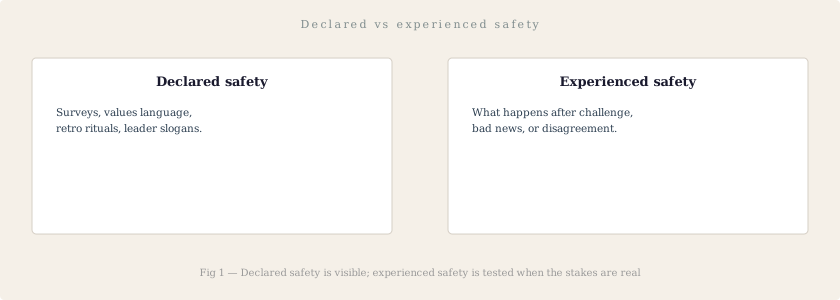
The language is present. Leaders talk about candour. Retrospectives include safety checks. Surveys report that people feel able to speak up. Then a consequential trade-off appears and the room goes careful. Questions soften. Objections become indirect. The real concern gets saved for after the meeting.
That gap is safety theatre. It does not mean every visible ritual is fake. It means the visible signals of safety have advanced faster than the lived consequence of truth.
What theatre looks like in practice
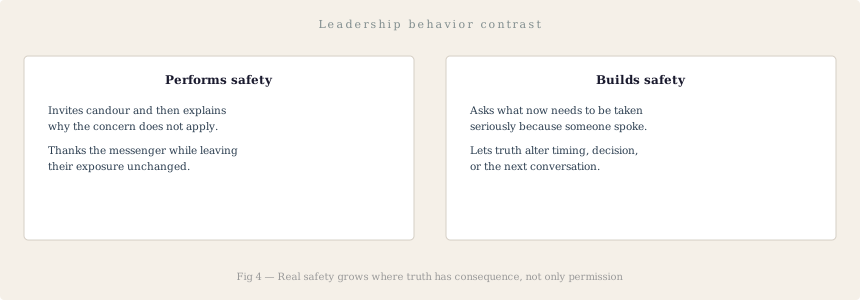
Leaders invite candour and then defend every challenged decision in the same breath.
Retrospectives contain safety rituals, but the meaningful concerns still move to side channels.
Bad news is tolerated only when it arrives polished, late, and stripped of implication.
Surveys report safety while meetings keep teaching people to self-edit.
The key diagnostic question is simple: what happens after somebody tells the truth? If the answer is "nothing, except they now carry more exposure," the safety work is still mostly symbolic.
Why real safety erodes
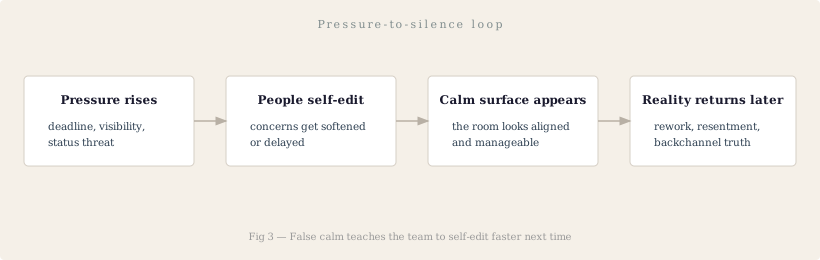
Status threat matters because people are not only protecting correctness. They are protecting credibility, standing, and belonging in expert-heavy environments. Delivery pressure matters because many leaders stay open only while the stakes are low. When the pressure rises, old certainty habits return.
Unclear decision rights matter because candour becomes irrational when speaking cannot alter the outcome. Recognition mismatch matters because teams learn quickly what style is actually rewarded. If confidence, certainty, and heroics draw the positive attention, that becomes the safest emotional posture to display.
What actually changes the experience
Truth changes a decision, not only the mood in the room.
Bad news can arrive without the messenger losing status or cover.
Leaders respond to challenge with inquiry before compression.
Recognition flows toward honesty and useful dissent, not only polish and heroics.
Show what changed because someone spoke plainly.
Reward early risk-raising before outcomes are certain.
Separate disagreement from disloyalty in public.
The guardrail against fake bravery coaching
Coaches can accidentally strengthen safety theatre by asking people to be braver in systems that still punish challenge. That is not developmental courage. It is moral pressure.
The responsible test is practical: if someone speaks plainly tomorrow, what real protection and consequence will exist that did not exist yesterday?
Continue Exploring
Go deeper into the work
The Book
The Art of Creating Self-Organizing Teams
The full framework behind this article — contracting, team dynamics, and practical coaching tools for every stage of the journey.
Companion Toolkit
Resistance Radar & Resilience Scorecard
Practical tools for mapping resistance patterns and measuring whether interventions increased capacity — not just compliance.
TA for Agile
Co-creative TA in Agile Contexts
Ego states, psychological contracts, group imago, and the relational concepts that underpin this article — applied to real teams.