Exit Ramps: Practical Language for De-escalating Drama in Agile Teams
A tactical phrase handbook for live escalation: name the missing choice, slow blame into sequence, and return ownership without rescuing.
What to say when the room is slipping and you have almost no time
Some coaching moments do not need more theory. They need a sentence that interrupts a bad sequence quickly enough for the room to regain contact with the work. That is the whole job of an exit ramp.
This piece is deliberately tactical. If you need help recognizing whether a pattern is actually a game, read Stop the Drama. Here the assumption is simpler: the room is already slipping, and your next sentence matters.
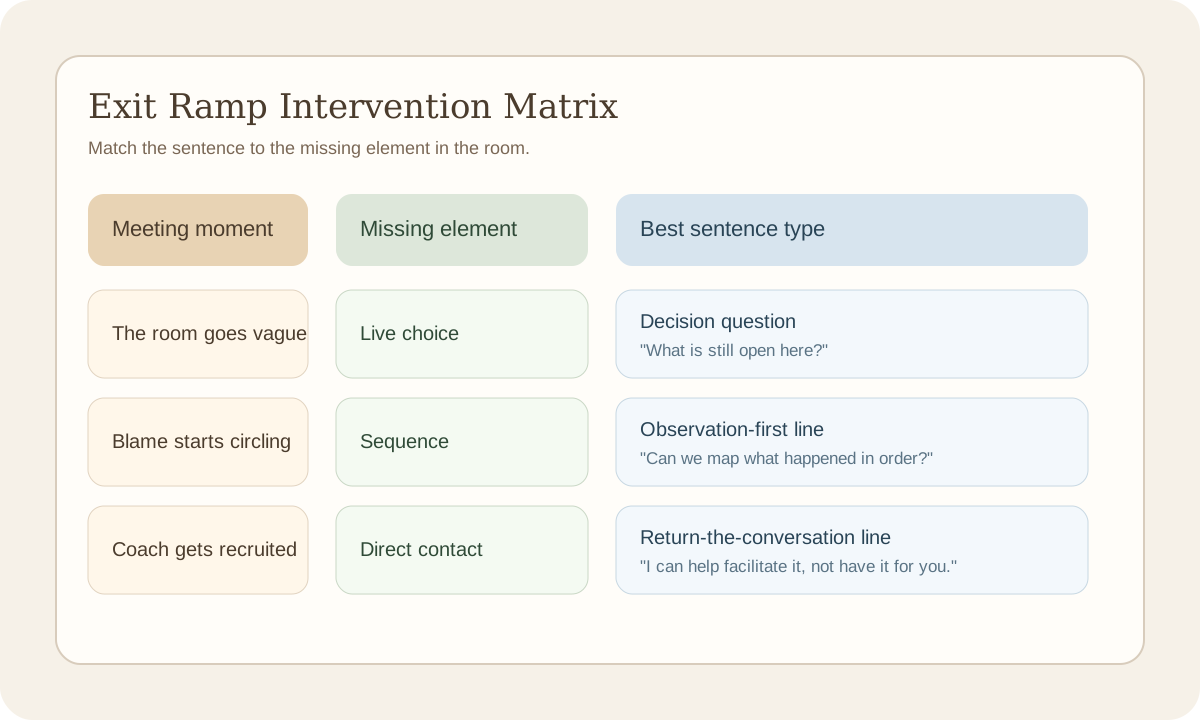
The four jobs an exit ramp can do
Useful intervention language usually does one of four things. It names a live choice. It slows blame into sequence. It returns a conversation to the people who should be having it. Or it exposes that the room is confusing emotional urgency with real authority.
The sentence is therefore only half the move. The other half is your discipline not to rescue the room with a longer explanation than it needs.
The room goes vague
Name the missing choice
"We have broad agreement. What is the actual decision still open?"
Blame starts circling
Slow accusation into sequence
"Before we decide who caused this, can we map what happened in order?"
The coach is being recruited
Return the conversation to the real parties
"I can help facilitate that discussion. I do not want to have it on anyone's behalf."
Authority is fuzzy
Clarify whether the room can decide
"Are we deciding here, recommending, or preparing something for another forum?"
Rescue feels generous
Offer structure without taking ownership
"I can help slow this down, but the next move belongs with the people carrying the consequence."
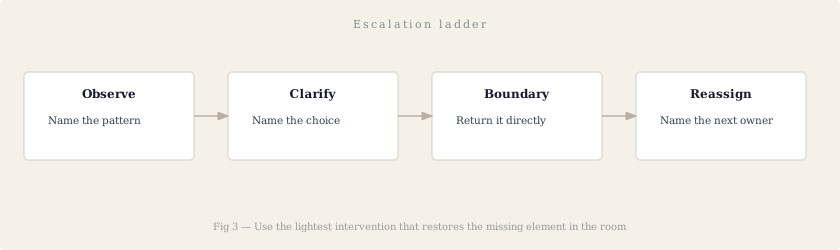
How to choose the lightest useful line
Start with the smallest sentence that restores contact with the missing element. If the room is merely vague, ask for the live choice. If blame is already running, ask for sequence. If authority is absent, name that directly instead of pretending better facilitation will solve it.
Common misuse
A smart-sounding line is not an exit ramp if the sequence stays intact.
Neutral language still fails when the real authority lives somewhere else.
Do not use elegant phrasing to help the room avoid a direct conversation it still needs.
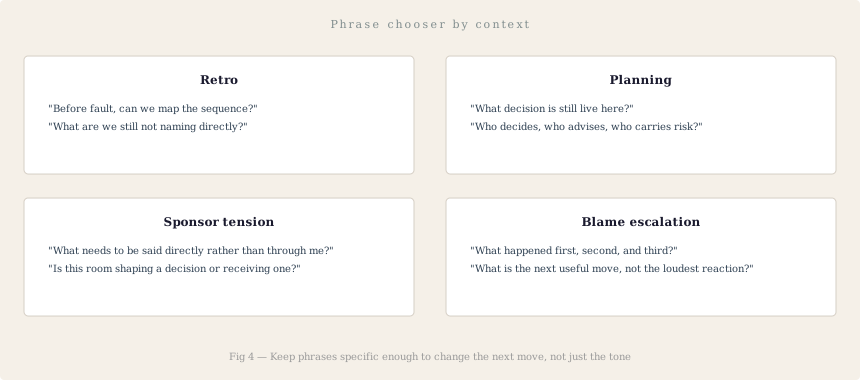
The standard to keep
The sentence should not make you the hero of the room. It should make the next piece of real work harder to avoid.
If the line leaves ownership, authority, or direct contact unchanged, it may be graceful, but it is not an exit ramp yet.
Continue Exploring
Go deeper into the work
The Book
The Art of Creating Self-Organizing Teams
The full framework behind this article — contracting, team dynamics, and practical coaching tools for every stage of the journey.
Companion Toolkit
Resistance Radar & Resilience Scorecard
Practical tools for mapping resistance patterns and measuring whether interventions increased capacity — not just compliance.
TA for Agile
Co-creative TA in Agile Contexts
Ego states, psychological contracts, group imago, and the relational concepts that underpin this article — applied to real teams.